
Crop - Livestock Integration in Sudan (A case of Gezira Irrigated Scheme)
Article Sidebar
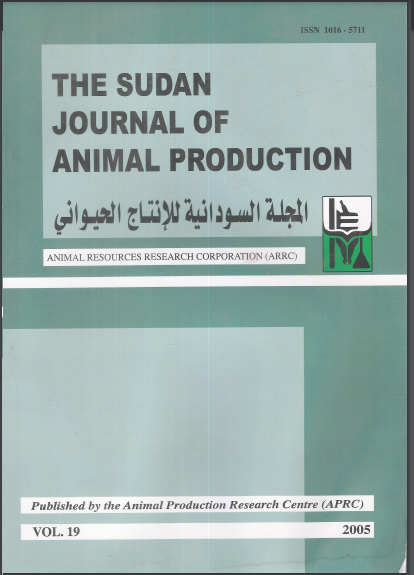
Main Article Content
Abstract
Towards the end of the 1990’s a significant decline in the areas sown to various
crops and a sharp drop in productivity have been witnessed in Sudan's irrigated agriculture.
At the same time feed shortages formed a main constraint on livestock production in the
country. Under such a situation integration of fodder production activities within the
existing crop rotations in irrigated agriculture seems plausible. Based on an optimization
economic model, namely linear programming, this paper aims at investigating such
prospects. The objective function in the basic model was to maximize farm returns. The
analysis was based on primary data collected in the irrigated Gezira Scheme, generated
through a comprehensive field survey in addition to supportive secondary data. The results
showed the feasibility of introducing the fodder legume Dolichos lablab "Lubia" in the
rotation for various reasons, such as no fertilizer needs and low demands for water and
labour. A number of fodder-introducing scenarios analyses were conducted around the
results of the basic model run. All scenarios demonstrated tangible increases in farm
returns, indicating that fodder cultivation would be profitable. Farmers’ income would be
enhanced, either directly through fodder returns or indirectly by raising livestock products.
Furthermore, fodder introduction would be conducive to reducing irrigation water
requirements. Under the present and suggested changes in resource
availability tomato, sorghum and cotton production would yield superior profitability to
that of wheat, groundnut and onions. With the optimal production plan returns were higher
than in the present situation by about 24%, while water requirement was 32% less.